
Opener or Door Problem? The One-Minute Test That Tells You
A garage door that will not move has two possible culprits: the opener that powers it, or the door hardware that carries its weight. The repair path, the cost of a wrong guess, and the safety risks are very different for each. One simple test with the manual release cord can tell you which side of the problem you are on in about a minute.
Request Service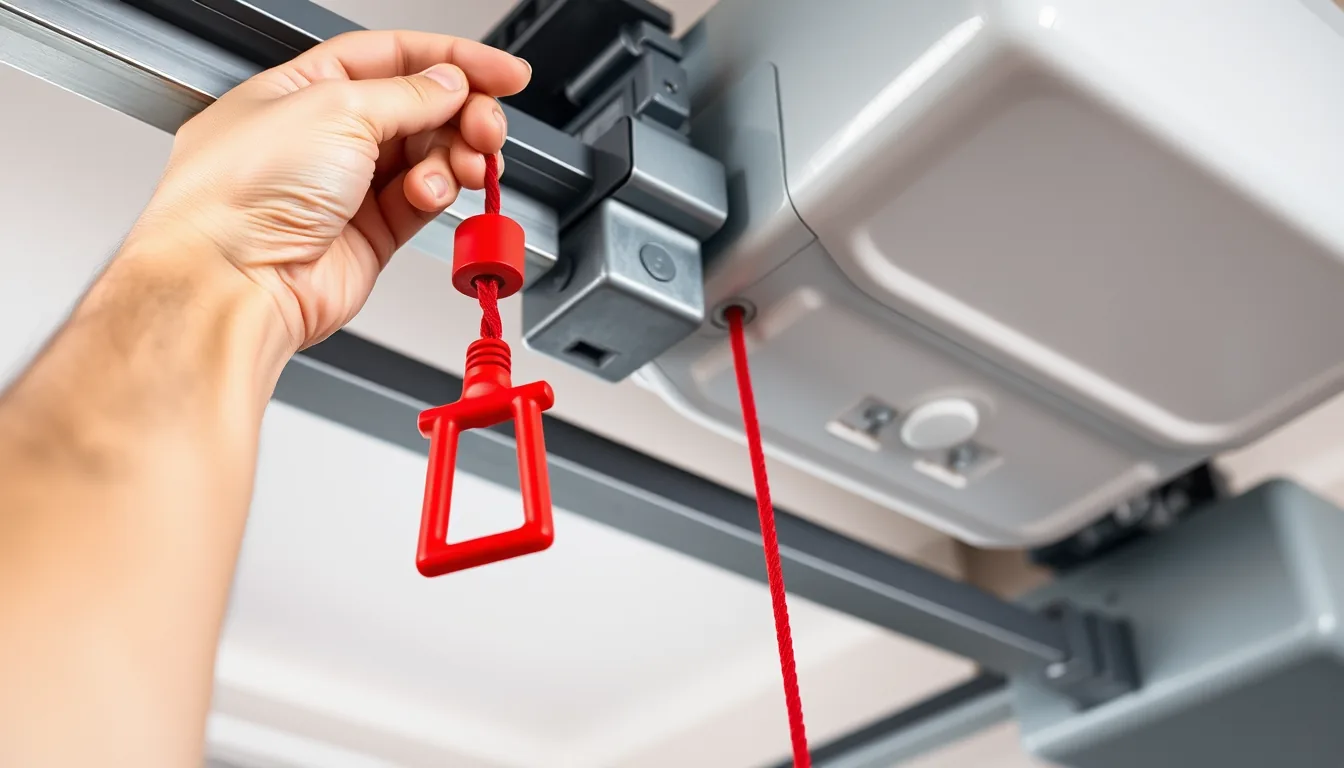
The One-Minute Test: Pull the Release With the Door Closed
Every garage door opener has a manual release: a red cord and handle hanging from the trolley carriage that slides along the opener rail. Pulling it disconnects the door from the opener so you can move the door by hand.
Do this only with the door fully closed. The springs carry nearly all of the door's weight. If a spring or cable has already failed, a door that is disconnected while open can fall fast and hard. With the door down, there is nowhere for it to fall.
Pull the release, then lift the door from the bottom with both hands. A healthy, balanced door lifts smoothly with about ten pounds of effort and stays put if you stop at waist height. What you feel in the next few seconds tells you which repair you are facing.
Smooth and Light: The Door Is Fine, Suspect the Opener
If the door glides up easily and holds its position, the springs, cables, and tracks are doing their jobs. The problem lives in the opener system. Common opener failures include:
- A stripped drive gear. Many chain-drive openers use a nylon gear that wears out over time; the motor hums but the chain never moves.
- Photo-eye sensor trouble. If the door opens fine but refuses to close, the small sensors mounted near the floor on each side are often blocked, dirty, or knocked out of alignment.
- A worn trolley carriage or failed circuit board. These show up as clicking, grinding, or no response at all.
Opener repairs do not involve the door's tensioned hardware, and simple checks such as cleaning the sensor lenses or swapping remote batteries are safe to try yourself.
Heavy, Stuck, or Crooked: It Is the Door Hardware
If you can barely lift the door, if it rises a few inches and drops back, or if one side hangs higher than the other, the problem is in the door itself, usually a spring, a cable, or a track.
- Broken torsion spring. Look at the spring on the shaft above the door. A break shows as a clear gap of an inch or two in the coil. A double-wide steel door can weigh 150 pounds or more, and with a broken spring you are lifting nearly all of it.
- Snapped cable. The door sits crooked, and you may see slack or dangling cable on one side.
- Bent track or damaged rollers. The door binds or sticks at the same spot every time.
Stop here. Torsion and extension springs, lifting cables, and the bottom brackets they attach to are under extreme tension and can cause serious injury. Do not adjust, unbolt, or test them. Leave the door where it is and request service.
Why Forcing a Bad Door With the Opener Multiplies the Damage
An opener is a pusher, not a lifter. It is built to move a balanced door that needs only a modest nudge, because the springs supply the real lifting force. When you keep pressing the button on a door with a broken spring or a jammed track, the motor strains against dead weight it was never designed to carry.
That is how one broken part becomes three. Forcing the opener can strip its drive gear, bend the rail or trolley, and crack the top door panel where the operator bracket attaches. It can also drag a crooked door further off its track or finish off a fraying cable. A door that feels wrong by hand should stay parked until a technician can assess it.
What to Do With Your Answer
Whichever branch the test pointed to, write down what you found: how the door felt by hand, any sounds the opener made, and anything you can see, such as a gapped spring, a slack cable, or blinking sensor lights. Then submit a service request through the form on our contact page and describe the problem. Repair needs vary by door and hardware, and a technician can confirm the diagnosis on site. The one thing not to do is keep hitting the button and hoping.
Frequently Asked Questions
Is it safe to pull the red manual release cord myself?
Yes, as long as the door is fully closed and nothing is under it. With the door down, disengaging the opener cannot make it fall. Never pull the release while the door is open: if a spring or cable has failed, the door can crash down without warning. After the test, most trolleys reconnect automatically the next time the opener runs through a full cycle.
The door lifts easily by hand, but the opener still will not move it. What now?
That points squarely at the opener system. First check that the trolley re-engaged after your release test, since many models only reconnect when the opener runs a cycle. If it is engaged and the motor hums without moving the door, a stripped nylon drive gear is a common cause in chain-drive units. Blinking sensor lights or a door that reverses while closing point to the photo eyes. Describe the exact symptom in your service request.