
Garage Door Opener Safety Reversal: The Two Tests Every Door Should Pass
A garage door is the heaviest moving object in most homes, and the opener's safety reversal systems are what keep it from closing on a person, a pet, or a car. Modern openers carry two separate protections: contact reversal and photo-eye beams. Both can be tested at home in about five minutes with nothing more than a scrap of lumber and a broom. This guide explains what each system does, how to test it, and what a failed test really means.
Request Service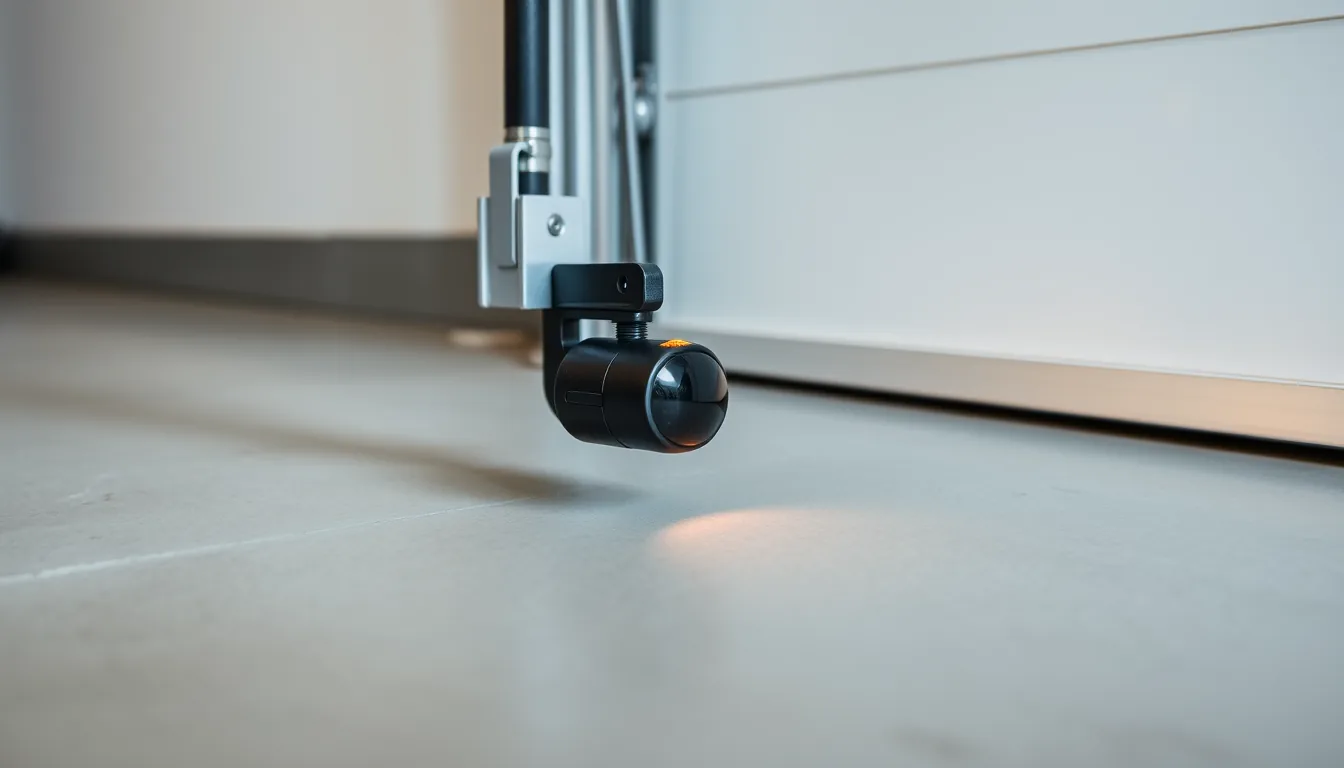
The Two Safety Systems Modern Openers Must Have
Residential garage door openers sold in the United States are built to the UL 325 safety standard, and federal regulation (16 CFR Part 1211) makes its core protections mandatory. Two systems matter most:
- Contact reversal. Required under UL 325, this is the opener's ability to sense that the closing door has touched an obstruction and reverse it back to fully open within about two seconds. It works by monitoring the force the motor is exerting against the door.
- Photo-eye sensors. Openers manufactured after January 1, 1993 must include a secondary, non-contact entrapment protection. On nearly every opener, that is a pair of photo-eye sensors: one unit projects an invisible infrared beam across the door opening, the other receives it. They mount on the tracks no more than about six inches above the floor, low enough to detect a small child or a pet lying in the opening.
The two systems back each other up. The photo eyes stop the door before it ever touches anything; contact reversal is the last line of defense if the beam misses something.
How to Run the 2x4 Contact Reversal Test
This test is safe to do yourself. It involves no ladders, no springs, and no tools beyond a piece of wood.
- Lay a 2x4 flat on the floor, centered in the door's path. Laid flat, the board is about 1.5 inches tall, which is the standard test obstruction.
- Close the door using the wall button or remote, then step clear of the opening.
- Watch what happens when the bottom of the door touches the wood. The door should stop and reverse to fully open within two seconds of contact.
A pass is a clean, prompt reversal. A fail is anything else: the door stalls and sits on the board, presses down and strains against it, or only reverses after a long pause. If the door fails, remove the board and avoid using the opener in automatic mode until the door has been assessed. Manufacturers recommend running this test monthly, and always after any opener adjustment or door repair.
How to Run the Photo-Eye Beam Test
The beam test checks the non-contact system. Start the door closing from the wall button, then, keeping your body out of the opening, pass an object such as a broom handle through the beam path near the floor. The door should stop immediately and reverse to fully open without touching anything.
While you are down there, look at the small indicator lights on each sensor. On most brands, the sending unit shows a steady light whenever it has power, and the receiving unit shows a steady light only when the beam is aligned. A receiver light that is off, dim, or blinking usually means the two eyes are no longer pointed at each other. Common causes are ordinary garage life: a trash bin or bicycle bumps a bracket, cobwebs or condensation film over a lens, or direct low-angle sunlight flooding the receiver. Wiping the lenses with a soft cloth and gently re-aiming the brackets until the light goes solid are safe do-it-yourself fixes.
What a Failed Test Actually Means
The two tests fail for different reasons, and the difference matters.
- Failed beam test. Usually alignment, dirty lenses, or damaged low-voltage wiring between the sensors and the motor head. If cleaning and re-aiming do not bring the receiver light back to steady, the wiring or the opener's logic board may be at fault, and a technician can trace it.
- Failed contact test. This is the more serious result. It can mean the closing force is set too high, the travel limits have drifted, or, very often, the door itself is binding: worn rollers dragging in the track, a bent track section, or springs that no longer balance the door's weight. When a door binds, the opener strains against friction all the way down, so it cannot tell the difference between normal resistance and a person underneath it.
In other words, a failed contact test is frequently a door problem wearing an opener costume. Repair needs vary by door and hardware, which is why an assessment matters more than a guess.
Why Force Settings Are Technician Work
Most openers have force adjustment dials or programming buttons, and it is tempting to turn the closing force up until the door stops "failing." Please do not. Raising the force does not fix anything; it teaches the opener to push harder through resistance, including the resistance of a trapped person or pet. That defeats the exact protection the test exists to verify.
There is a second hazard behind this one. Contact reversal failures often trace back to door balance, and balance is controlled by torsion or extension springs and their lift cables, components under extreme tension that can cause serious injury if handled without the right tools and training. Force settings, travel limits, and spring balance interact, so they should be evaluated together by someone qualified.
If your door failed either test, note which test failed and what the door did, then submit a service request through the form on our contact page. A technician can assess the balance, sensors, and force settings as one system and put the safety reversal back in working order.
Frequently Asked Questions
How often should I test my garage door opener's safety reversal?
Opener manufacturers recommend testing monthly. Run both checks together: the 2x4 contact reversal test and the photo-eye beam interruption test. The pair takes about five minutes. Also retest any time the opener is adjusted or the door has work done, since new springs, rollers, or travel-limit changes can alter how the door behaves. A door that passed last year has not necessarily passed today.
My opener was made before 1993 and has no photo eyes. Is that a problem?
Openers manufactured before January 1, 1993 predate the federal requirement for a secondary entrapment protection system, so many have no photo-eye sensors at all and rely on contact reversal alone, if they reverse at all. Safety organizations generally recommend replacing openers of that age rather than retrofitting them. A technician can assess whether your unit reverses properly and advise on a modern replacement.