
Garage Door Repair or Replacement: How to Decide
A garage door with a broken spring or a dented panel does not always need to be replaced, and a door that still opens is not always worth keeping. The honest answer depends on the door's age, how widespread the damage is, and whether matching parts still exist. This guide walks through the same questions a technician weighs, so you can go into a repair conversation informed.
Request Service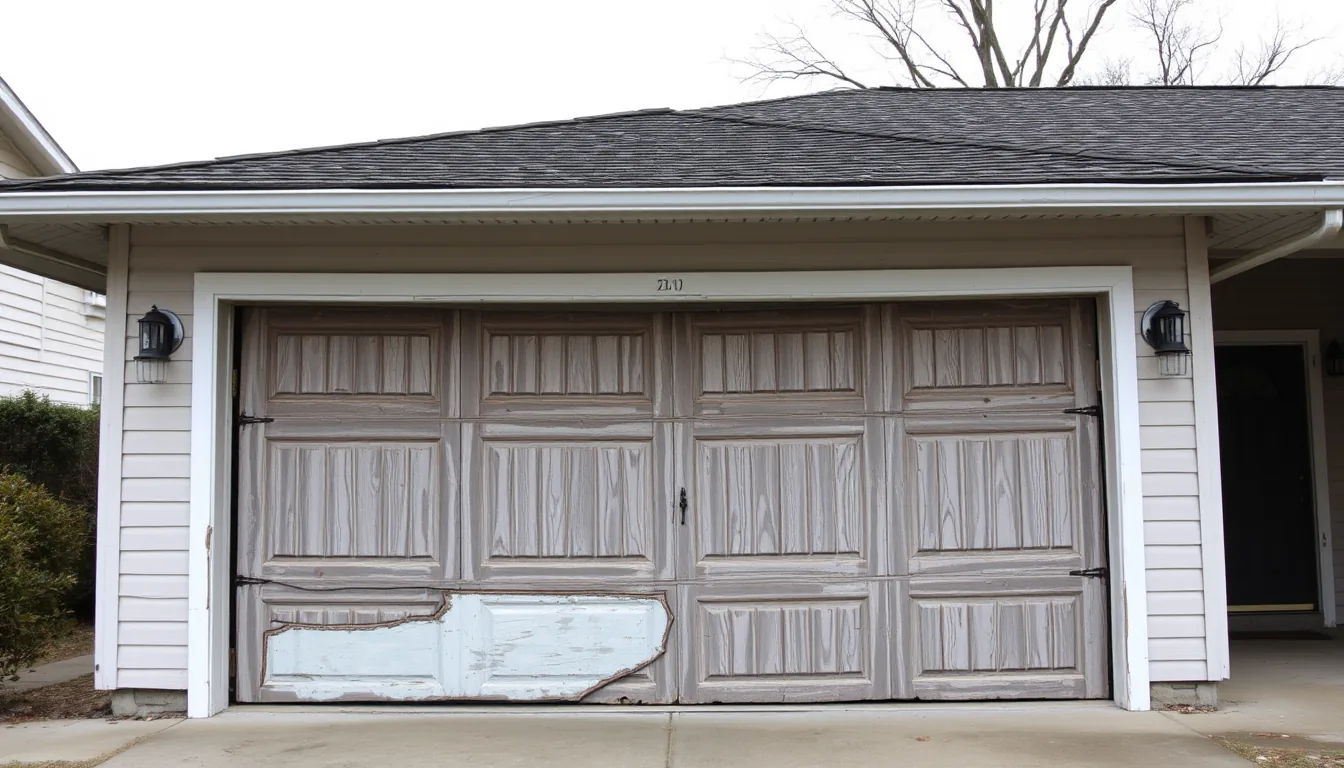
Start With the Age of the Door
A steel sectional garage door typically lasts 15 to 30 years, depending on climate, use, and maintenance. Wood doors can last as long, but only with regular sealing or paint. The moving parts wear out faster than the door itself: a standard torsion spring is rated for about 10,000 open-close cycles, which works out to roughly 7 to 10 years for a household that uses the door four times a day.
Age matters for a second reason: parts. The older the door, the more likely its sections, hinges, and end caps have been discontinued, which turns a simple panel swap into a hunt for hardware that may no longer exist.
One Bad Panel or a Failing Door?
Damage limited to one section usually points to repair. A single dented or cracked panel can often be replaced on its own, as long as the manufacturer still produces that section in the same height, profile, and joint style. Sections lock together along a tongue-and-groove or shiplap edge, so a near-match from a different line will not seal or track correctly.
Widespread deterioration points the other way. Watch for:
- Rust creeping along the bottom sections, where road salt and standing water attack steel first.
- Rot or soft spots in wood doors, especially at the bottom rail and the joints.
- Delamination, where the steel or composite skin separates from the insulation core, leaving panels that flex, rattle, and sag.
When several sections show these signs, replacing them one at a time costs more effort than it returns, and the door's structure is already compromised.
The Repeated-Repair Pattern
A door that keeps eating parts is telling you something. If you have replaced a spring, then a cable, then rollers within a couple of years, the failures may share one root cause: a door that is out of balance or out of square wears every component attached to it. Bent track, worn rollers, and frayed cables often arrive as a set, not as separate bad luck.
One honest warning belongs here. Torsion springs and lift cables are under extreme tension, and the bottom brackets anchor that tension. Never adjust, unwind, or unbolt these parts yourself; serious injuries happen this way. Have a technician assess the whole system rather than swapping whichever part failed loudest.
Insulation and R-Value, Without the Hype
R-value measures how well a material resists heat flow; a higher number means slower heat transfer. Garage doors insulated with polystyrene sheets usually run about R-4 to R-9. Doors with injected polyurethane foam, which bonds to both skins, commonly reach R-12 to R-18.
Two honest caveats. First, advertised R-values are measured at the center of a panel; the installed door performs lower because heat escapes at the joints and around the perimeter. Second, insulation matters most when the garage is attached to the house, has a living space above it, or doubles as a workspace. For a detached storage garage, a high R-value changes little. But if your current door is uninsulated single-skin steel and you actually use the space, replacement can be an upgrade, not just a fix.
The Safety Gap on Very Old Doors
Since January 1, 1993, federal rules have required residential garage door openers to include an entrapment-protection device, almost always a pair of photo-eye sensors mounted near the floor that reverse the door when the beam is broken. An opener made before 1993 may have no photo eyes at all and may not reverse reliably on contact.
The opener can be replaced without replacing the door. But when a pre-1993 opener is paired with a door of the same vintage, both ends of the system are past the point where new parts fit well, and it is fair to weigh a full replacement of both.
A Simple Way to Make the Call
Lean toward repair when the door is under about 15 years old, the damage sits in one section or one component, and matching parts are still made. Lean toward replacement when several signs stack up: multiple failing sections, a discontinued panel style, a repair history that keeps growing, no insulation where you need it, or a pre-1993 opener with no photo eyes.
If you are not sure which side your door lands on, describe its age, material, and symptoms in the service request form on our contact page. A technician can assess the door in person and lay out both paths, because repair needs vary by door and hardware.
Frequently Asked Questions
Can just one damaged garage door panel be replaced?
Often, yes. If one section is dented or cracked and the rest of the door is sound, a matching replacement section can be installed on its own. The catch is availability: the new section must match the door's height, profile, and joint style, and manufacturers discontinue panel designs over the years. A technician can check whether your door's style is still produced before you commit either way.
Is a garage door opener made before 1993 safe to keep?
Openers built before January 1, 1993 were not required to have photo-eye sensors, so many cannot detect a person or pet under a closing door. You can test any opener's contact reversal by laying a 2x4 flat under the door; it should reverse when it touches the board. If your opener fails that test or has no photo eyes, replacing the opener is worth considering even if the door stays.