
7 Signs Your Garage Door Spring Is Broken or Failing
Most garage door springs break with a bang, and it often happens on a cold morning when steel is at its most brittle. The good news: a broken or failing spring announces itself in clear, recognizable ways. Here are seven signs to check for, plus what to do — and what not to do — once you spot one.
Request Service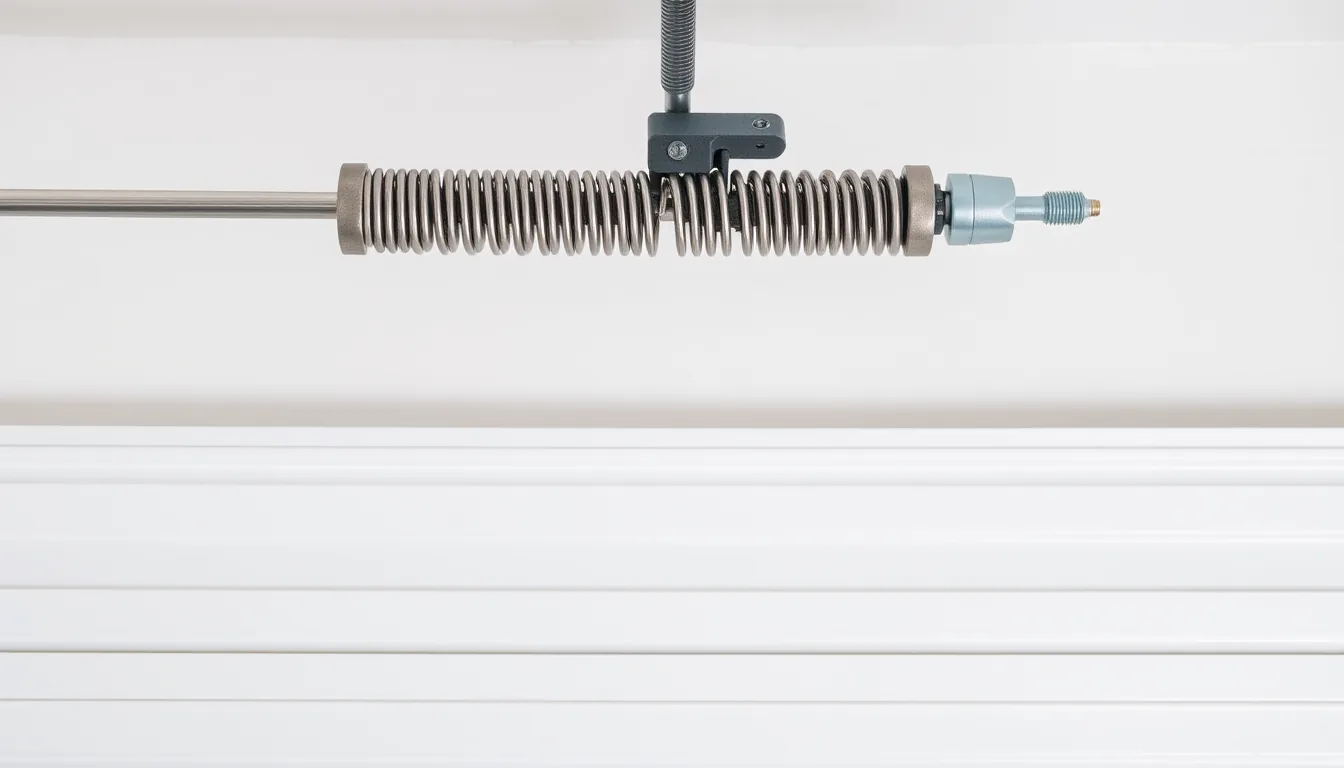
The Bang and the Gap in the Coil
A torsion spring is a tightly wound coil of hardened steel mounted on a shaft above the door opening. On a typical 7-foot door it is wound roughly 30 quarter turns, and it holds that tension for the life of the spring. When the steel fatigues and snaps, all of that stored energy releases in a fraction of a second. That is sign one: a single loud bang from the garage, often described as a firecracker going off or something heavy falling. Many homeowners hear it, go look, and find nothing on the floor.
Sign two is the confirmation. With the door closed, look up at the spring above the door. A broken torsion spring shows a clean gap of one to two inches between the coil sections — two separated halves sitting on the same shaft. An intact spring is one continuous coil with no break in it.
How the Door Behaves After a Spring Breaks
If you missed the bang, the door itself will tell you. Watch for these four behaviors:
- The door lifts about six inches and stops. The spring, not the opener, carries most of the door's weight — a double-car steel door can weigh 150 pounds or more. When the opener suddenly has to lift dead weight, its force limit trips and it stops or reverses a few inches off the floor.
- The door rises crooked. Many doors use two springs. If one breaks, the surviving spring lifts its side while the other side drags, so the door cocks sideways in the tracks and can jam there.
- The lift cables hang slack. Spring tension is what keeps the cables wound tight on the drums at each top corner of the door. A broken spring lets them droop, unwind, or jump off the drum entirely.
- The door slams shut. With nothing counterbalancing its weight, a closing door drops fast instead of settling down under control.
Sign Seven: The Warnings Before the Break
Springs rarely fail without earlier hints, and sign seven is really a cluster of visual warnings you can catch in advance. Watch for rust or pitting on the coil, which eats into the steel and shortens its life. On extension springs — the lighter springs mounted alongside the horizontal tracks — check the coils with the door fully open, not closed. An extension spring stretches when the door closes, so gaps in the coil while the door is down are normal. With the door up, the spring should relax and its coils should pull back together and touch; gaps or a stretched-out look in that relaxed position mean the steel has lost its shape and the spring is wearing out. Also note a door that suddenly feels heavy when you lift it by hand with the opener disconnected. There is also simple math working against every spring. A standard torsion spring is rated for roughly 10,000 open-close cycles. At four cycles a day, that is about seven years of ordinary use before the steel reaches the end of its rated life.
What to Do Next — and What Not to Do
If you see any of these signs, stop using the door. Leave it where it is, ideally closed. Do not pull the red emergency-release cord while the door is up — with a broken spring, nothing is holding the door, and it can come down hard. Keep children, pets, and vehicles clear until the spring is replaced.
Most important: do not try to wind, adjust, or replace a garage door spring yourself, and do not loosen the cables or the bottom brackets they attach to. These parts are under extreme tension, and releasing that tension the wrong way causes serious injuries every year. Spring work genuinely belongs to a trained technician with proper winding bars and correctly sized replacement springs.
When you are ready, describe what you found — the bang, the gap in the coil, the crooked lift — and submit a service request through the form on our contact page. Those details help a technician show up prepared with the right spring size and hardware for your door.
Frequently Asked Questions
Can I still open my garage door if the spring is broken?
It is best not to try. The spring does the heavy lifting; the opener only guides the door along its rail. Forcing a springless door up can burn out the opener motor, bend the top panel where the opener arm attaches, or let the door fall on someone. If a car is trapped inside, mention that when you submit your service request so the technician can plan to release the door safely.
Why do garage door springs break?
Metal fatigue is the usual cause. A standard torsion spring is rated for about 10,000 open-close cycles, and every trip up and down counts as one cycle. Rust speeds the process by pitting the steel, which is why a light coat of garage-door lubricant a few times a year helps. Cold weather, an undersized spring, or a door heavier than the spring was matched for can all shorten that life further.